Palm derivatives move through long, fragmented and often opaque supply chains, making it difficult for any one company to understand where risks lie, let alone address them. ASD is built on a simple premise: by pooling data, expertise and influence, companies can see further upstream – and do more with what they find. Here’s how we do it.
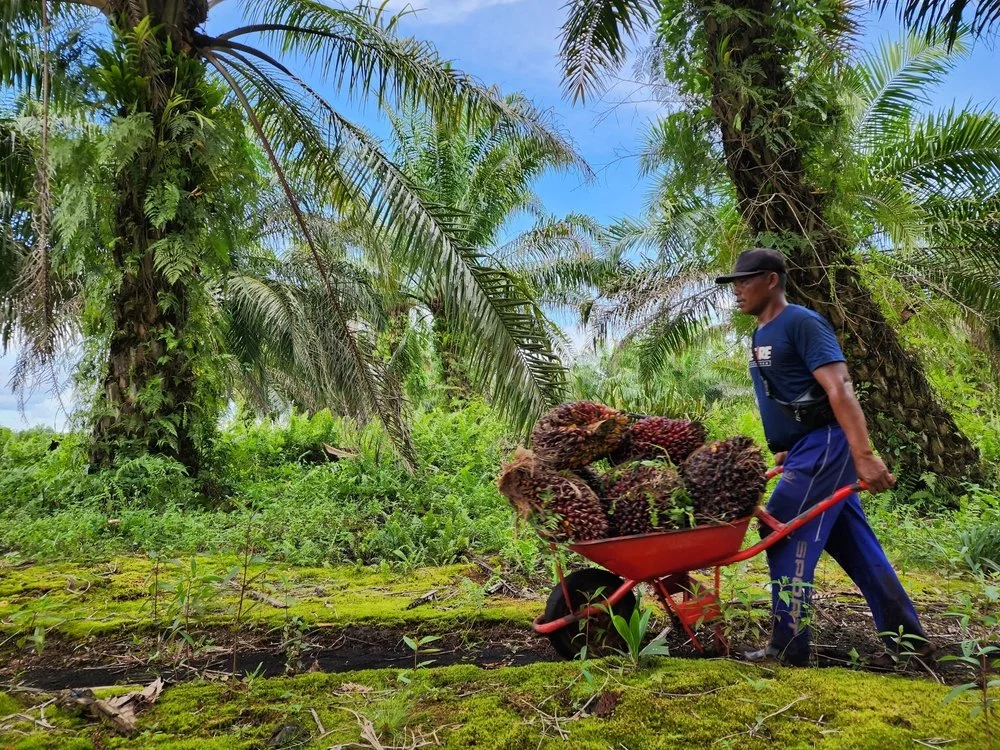
For companies using palm-derived ingredients, the challenge is rarely recognising that environmental and social risks exist. The harder question is what they can realistically do about them. Palm derivatives are found across cosmetics, personal care, home care and oleochemicals, yet the supply chains behind them are exceptionally difficult to navigate. Between a company buying an ingredient and the mill processing the original palm fruit, there can be four to ten intermediaries, with chemical transformation, trading and spot sourcing adding further layers of complexity.
This creates a fundamental problem. A downstream company may have ambitious policies on deforestation, human rights and responsible sourcing, but delivering against them requires understanding where its materials originate, where risks sit within the supply chain and where it has sufficient influence to drive change.
That is the practical problem ASD was created to solve.
Turning fragmented purchasing into collective leverage
Individually, most derivatives buyers account for relatively small volumes of palm oil or palm kernel oil. Mapping those volumes upstream can be highly resource-intensive, and multiple separate downstream players asking suppliers for supply chain information can create duplication of efforts and significant inefficiencies. ASD changes the equation by bringing together more than 40 companies with connections to many of the same suppliers, upstream mills and production areas. Members pool resources, information and influence, creating a collective view of a supply chain that would be extremely difficult for any one company to build alone.
This collective approach also creates efficiencies for upstream suppliers. Rather than responding to multiple, potentially inconsistent transparency requests from downstream customers, suppliers can participate in a harmonized investigation process coordinated through an independent third party. Over successive investigation cycles, this centralized approach has helped build trust, strengthen supplier participation and improve the consistency of information collected across the supply chain.
The scale of that collective picture is significant. In 2026, ASD has mapped 1.2 million tonnes of palm-based materials and linked more than 2,000 mills to its collective supply chain.
But the real value lies in what members can do with that information.
Building transparency that leads somewhere
Each year, ASD conducts this detailed transparency and supply chain mapping exercise, engaging more than 400 suppliers and tracing members’ palm-based materials through refineries and crushers towards mills and plantations.
The methodology follows several stages, beginning with the collection of members' palm-based purchasing volumes and the identification of direct and indirect suppliers within the investigation scope. Through supplier engagement and data analysis, ASD then reconstructs supply chain connections to refineries, crushers and mills, and, where information is available, plantations. These findings are used to calculate transparency levels at different supply chain tiers and map the geographic distribution of potential sourcing areas.
This is not presented as perfect, end-to-end traceability where the evidence does not support it. Given the complexity of the derivatives supply chain, ASD takes an evidence-based approach, combining direct supplier engagement and disclosures, publicly available information, purchasing volumes and supply chain connections to establish individualized mill lists for members and develop transparency scores from refinery, mill, and plantation levels.
Transparency therefore becomes a means to an end: input information needed to monitor and manage risks, rather than just a reporting exercise. The resulting data feeds into deforestation monitoring, grievance monitoring and management, supplier evaluation and geographic risk prioritisation. ASD can use satellite monitoring to assess potential deforestation around mills, connect grievances with members’ supply chains and coordinate engagement with suppliers where action is needed. It also helps members understand where collective investment can make a difference on the ground.
From supply chain intelligence to due diligence
The value of this collective infrastructure is becoming particularly clear as companies navigate the due diligence requirements associated with regulations such as the EU Deforestation Regulation (EUDR). While responsibility for compliance ultimately remains with individual companies, ASD’s methodology can support members across the three core stages of the EUDR due diligence process: gathering information, assessing risk and taking steps to mitigate identified risks.
The annual supply chain mapping exercise provides an important starting point. ASD collects information including product volumes and countries and regions of production, while continuing to explore how more granular plantation-level information can be incorporated. Engagement with upstream players is also used to encourage greater disclosure and strengthen the information available to members over time.

That information can then be used to build a more informed picture of risk. ASD combines its supply chain mapping with satellite-based deforestation monitoring through Nusantara Atlas, grievance analysis and supplier evaluation through the Sustainable Palm Index. Risk can be prioritised geographically, including at country and province level, and through analysis around mill catchment areas, helping members focus attention where potential exposure is greatest.
Where risks are identified, the methodology also supports the move from assessment to mitigation. ASD coordinates engagement with supply chain players, develops guidance for grievance and NDPE management, supports collective follow-up on grievances and facilitates investment in responsible field projects designed to address risks connected with the collective supply chain, enabling members to focus due diligence efforts where risks intersect with stronger supply chain connections, supporting more targeted follow-up and the efficient allocation of resources.
This does not turn ASD into a compliance mechanism, nor does it remove the responsibility of individual members to conduct their own due diligence. What it does is provide a shared foundation of data, methodologies, monitoring and engagement that companies can draw on as they build and strengthen their own systems.
In a market defined by complexity and fragmentation, no single downstream company can see everything or influence everyone. By working together, however, companies can see considerably further upstream – and turn that visibility into better-informed risk assessment, more targeted engagement and practical action.