
How we work Risk and Grievances Management
Identifying risk and strengthening the response
With environmental and human rights violations continuing to be linked to palm production, accurate risk monitoring and effective grievance management are key to building responsible supply chains.
For an individual downstream company, however, identifying an issue is only part of the challenge. It must also establish whether the grievance is potentially connected to its supply chain, understand its severity and determine what action to take.
ASD combines shared supply chain intelligence, dynamic monitoring systems and collective engagement to help members do this more effectively.
In 2025, 27 members participated in analysis of deforestation- and conversion-free volumes, using transparency data and satellite monitoring to strengthen their wider due diligence efforts.
From identifying risk to managing it
ASD’s risk and grievance work builds directly on its transparency activities. By understanding the suppliers, mills and sourcing regions potentially connected to members, ASD can help identify where environmental and social risks may exist and prioritise areas for further investigation and action.
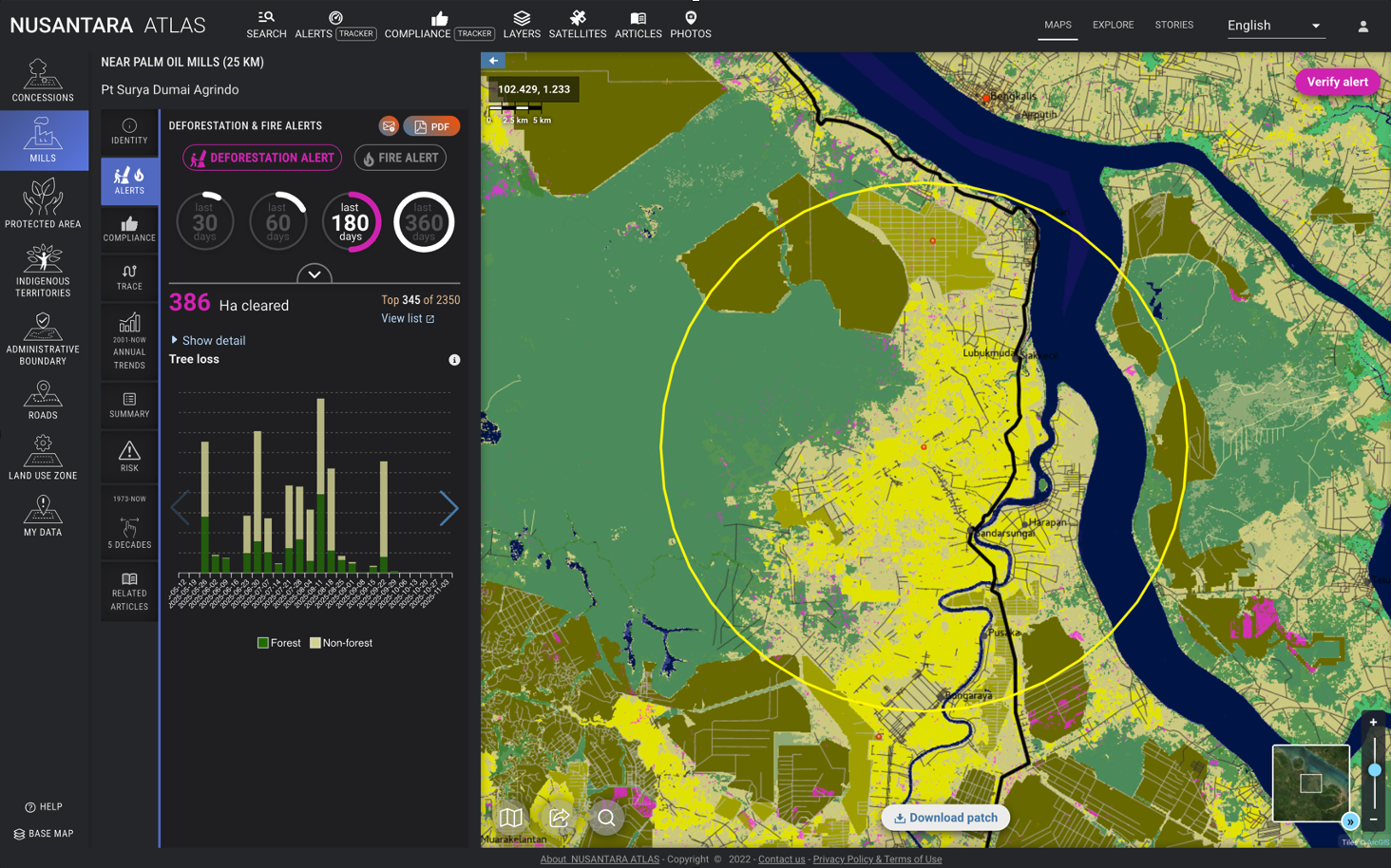
This includes monitoring human rights and environmental grievances raised by NGOs, civil society and other stakeholders. ASD also works with The Tree Map’s open-source Nusantara Atlas platform, using satellite data to proactively monitor potential deforestation connected to members' collective supply chains.
Relevant grievance information is centralised and assessed according to factors including severity, scale and persistence. Where priority cases are identified, ASD can coordinate with NGOs and civil society and engage suppliers and traders collectively to gather information, understand corrective action and encourage progress towards resolution.
For members, this creates a more efficient way of keeping track of risks across complex supply chains. It reduces duplicated investigation and supplier engagement while increasing the collective leverage available when action is required.

Key activities include:
Monitoring human rights and environmental grievances in the palm sector
Proactively monitoring deforestation using Nusantara Atlas
Connecting risks and grievances with members' supply chains
Prioritising and collectively managing significant grievance cases
Coordinating with NGOs, civil society, suppliers and traders
More detail on ASD’s monitoring methodologies, DCF analysis and grievance management can be found in the 2025 Annual Update on Progress.
Strengthen your approach to supply chain risk
Find out how collective monitoring, shared intelligence and coordinated engagement can support your approach to environmental and human rights risks.